
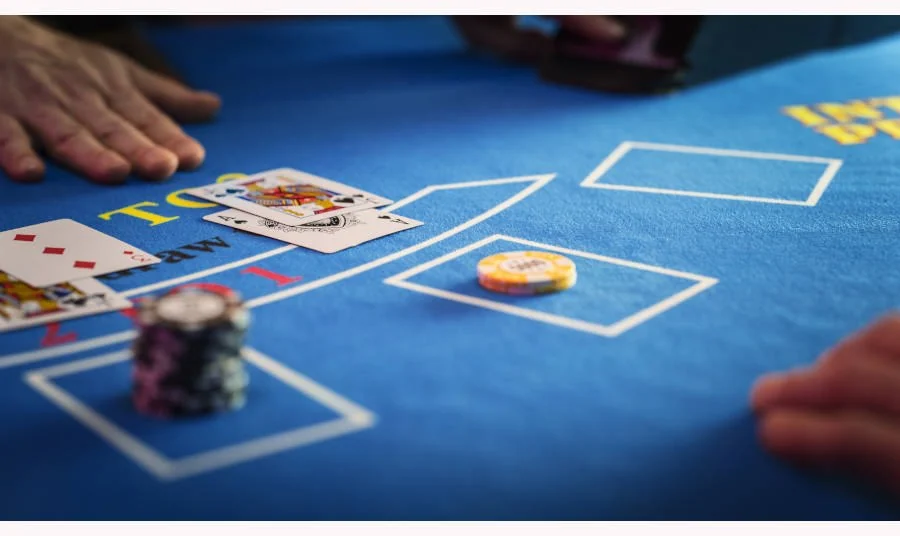
Walking onto a casino floor is a sensory overload of flashing lights, ringing bells, and the rhythmic clatter of chips. Among the classic green felt tables of blackjack, roulette, and baccarat, you will notice an array of colorful secondary betting circles and specialized grids. These are side bets, offering the tantalizing promise of instant wealth from a single wager. Whether it is betting that your first two blackjack cards will form a flush, wagering that a roulette ball will land on a specific number three times in a row, or chasing a progressive jackpot in Caribbean Stud, side bets are engineered to catch your eye and drain your bankroll at an accelerated pace.
At first glance, placing a small five-dollar chip on a side bet feels harmless. After all, the main game is already underway, and the potential payouts can reach fifty to one or even thousands to one. However, behind the flashing lights and oversized payouts lies a mathematical reality that separates casual entertainment from financial bleeding. Side bets consistently carry some of the worst house edges in the entire gambling industry. Understanding the mathematics behind these wagers reveals why the house always wins big on side bets and how avoiding them is the single most effective strategy for protecting your bankroll.
The Mathematics of the House Edge
To understand why side bets are so destructive to your bankroll, you must first look at how the house edge operates in standard casino games. The house edge is the mathematical advantage that the casino builds into every game over the long term.
In a standard game of blackjack played with basic strategy, the house edge can be whittled down to less than half a percent. In European roulette, the single-zero wheel sits at a manageable 2.70 percent house edge. These low percentages mean your bankroll slowly churns, giving you hours of entertainment for a relatively small expected loss.
Side bets completely obliterate this careful mathematical balance. While the main game might offer a house edge under two percent, a typical side bet on that same table often carries a house edge ranging from five percent to a staggering fifteen percent or higher. Some progressive jackpot side bets feature a house edge that exceeds twenty percent. When you combine a low-house-edge main game with a high-house-edge side bet, you dramatically increase your expected hourly loss rate, turning a session that should last hours into a rapid donation to the casino’s profit margin.
Deconstructing Popular Side Bets Across Classic Table Games
Different table games feature distinct types of side bets, each designed to exploit human psychological biases toward rare events and large payouts.
Blackjack Side Bets
Blackjack is famous for offering some of the best odds in the casino, which makes the presence of side bets particularly ironic.
-
The Perfect Pairs side bet: This wager pays out if your initial two cards form a mixed pair, colored pair, or a perfect pair. While hitting a pair is exciting, the house edge on standard Perfect Pairs bets typically hovers around six to eleven percent depending on the deck count and pay table.
-
21+3: This side bet combines your first two cards with the dealer’s upcard to form poker hands like a flush, straight, or three of a kind. While it introduces a fun poker dynamic, the house edge often sits near three to seven percent, significantly eroding the low house edge of the underlying blackjack game.
Roulette Special Features
Roulette players generally stick to outside bets like red or black, or inside bets on specific numbers. However, modern electronic roulette terminals and live dealer studios frequently introduce racetrack betting and specialized neighbor bets. While French roulette rules like la partage can lower the edge on even-money bets, custom multi-number layout wagers often maintain standard single-zero or double-zero mathematical disadvantages, compounded by the speed at which players throw chips onto the felt.
The Psychology of the Big Payout
Casinos do not design side bets because they want to give away money; they design them because they understand human psychology. Players are naturally drawn to high-variance bets with massive potential payouts, a phenomenon well-documented in behavioral economics.
When you see a side bet that promises a 100-to-1 payout for hitting three sevens of the same suit, your brain focuses entirely on the success scenario. You vividly imagine walking away with a massive stack of colored chips. The human brain is notoriously bad at intuitively calculating low probabilities. We struggle to comprehend the difference between a one-in-fifty chance and a one-in-five-hundred chance.
This psychological trap is reinforced by intermittent reinforcement. When you hit a side bet early in a session, the rush of dopamine creates a powerful memory that overrides all the mathematical losses that led up to and followed that single moment. You remember the time you turned five dollars into five hundred, but you conveniently forget the dozens of five-dollar chips you fed into the side bet box over the previous three hours.
The Cumulative Cost of Volatility
Beyond the high house edge, side bets introduce extreme volatility to your bankroll. Volatility measures how wildly your bankroll fluctuates during a session.
When you play a low-house-edge game with standard bets, your bankroll graph experiences gentle waves up and down. Side bets inject sharp, jagged spikes into that graph. Because the probability of winning a side bet is typically very low, you experience long stretches of continuous losses punctuated by rare, fleeting wins.
If your overall bankroll is sized for a standard grinding session, introducing high-volatility side bets will cause you to bust out far faster than anticipated. You find yourself reaching into your wallet for reloads much sooner because those small, seemingly insignificant chips add up with ruthless mathematical efficiency over the course of a few hundred hands.
Smart Strategies for Table Game Players
Protecting your bankroll does not mean you cannot enjoy the excitement of table games. It simply requires adopting a disciplined approach that respects the underlying mathematics of the casino floor.
-
Ignore the extra boxes: The easiest way to avoid the side bet trap is to physically ignore the secondary betting circles on the table layout. Treat them as if they do not exist.
-
Focus on the main game: Direct your entire attention toward mastering the core rules and strategies of the primary game. Whether it is playing optimal basic strategy in blackjack or sticking to single-zero wheels in roulette, mastering the main game gives you the highest statistical chance of extending your playtime.
-
Bankroll insulation: If you choose to play a side bet purely for entertainment value on a rare occasion, treat it strictly as a separate, disposable lottery ticket purchase rather than a legitimate strategic play. Budget a tiny, fixed amount for side bets that will not impact your core gaming bankroll.
Conclusion
Table game side bets represent the ultimate triumph of marketing over mathematics. They prey on our love for massive payouts, our desire for extra excitement, and our tendency to underestimate the long-term impact of a high house edge. While a casual side bet here and there might occasionally result in a memorable win, the statistical reality is that these wagers are financial sinkholes designed to accelerate the house’s profit. By ignoring the side bet boxes, focusing on the core mathematics of the main game, and maintaining strict discipline, you preserve your bankroll, extend your playing time, and give yourself the best possible chance of walking away from the table a winner.